GodsAcres.org
  • HOME
    • WHAT'S NEW?
  • ABOUT
    • contact us
    • our history
    • our pastor
    • visitors (FAQ)
    • what we believe
    • WHAT'S NEW?
  • AUDIO & VIDEO
    • AUDIO ARCHIVES
    • -----------------------------------
    • audio - 2025 radio
    • -----------------------------------
    • audio - 2025 revivals & CM
    • audio - 2025 weekly services
    • -----------------------------------
    • VIDEO - 2025 revivals & cm
    • VIDEO - 2025 weekly services
    • -----------------------------------
    • music [choir]
    • music (weekly)
    • -----------------------------------
  • CHILDREN
    • annual bible school
    • children's choruses
    • KAREN'S KORNER
    • printable lessons
    • sunday school
  • EVENTS
    • Calendar of Events
    • camp meeting
    • dates and reservations
  • GALLERY
    • -----------------------------------
    • 2023 portraits
    • 2022 portraits
    • 2021 portraits
    • 2020 portraits
    • 2019 portraits
    • 2018 portraits
    • 2017 portraits
    • -----------------------------------
    • - 2015-2016 archives
    • - 2013-2014 archives
    • - 2011-2012 archives
    • - 2005-2010 archives
    • -----------------------------------
  • LIVE STREAMING
    • JOIN OUR LIVE BROADCAST
  • RESOURCES
    • -----------------------------------
    • study materials
    • - by author
    • - by category
    • - by title
    • -----------------------------------
    • sunday school (adult)
    • sunday school (primary)
    • sunday school (youth)
    • -----------------------------------
    • The Gospel Trumpeter
    • Questions & Answers
    • -----------------------------------
    • Revelation Explained
    • the revelation chart
    • the tabernacle study
    • -----------------------------------
  • YOUTH
    • -----------------------------------
    • meet our local youth group
    • -----------------------------------
    • youth devotions
    • youth lessons
    • -----------------------------------
    • ARCHIVES (audio & video)
    • -----------------------------------
    • 2024 audio messages
    • 2025 audio messages
    • -----------------------------------
    • 2024 video messages
    • 2025 video messages
    • -----------------------------------
    • bible studies
    • senior bible studies
    • -----------------------------------
    • sunday school lessons
    • video lessons
  • HOME
    • WHAT'S NEW?
  • ABOUT
    • contact us
    • our history
    • our pastor
    • visitors (FAQ)
    • what we believe
    • WHAT'S NEW?
  • AUDIO & VIDEO
    • AUDIO ARCHIVES
    • -----------------------------------
    • audio - 2025 radio
    • -----------------------------------
    • audio - 2025 revivals & CM
    • audio - 2025 weekly services
    • -----------------------------------
    • VIDEO - 2025 revivals & cm
    • VIDEO - 2025 weekly services
    • -----------------------------------
    • music [choir]
    • music (weekly)
    • -----------------------------------
  • CHILDREN
    • annual bible school
    • children's choruses
    • KAREN'S KORNER
    • printable lessons
    • sunday school
  • EVENTS
    • Calendar of Events
    • camp meeting
    • dates and reservations
  • GALLERY
    • -----------------------------------
    • 2023 portraits
    • 2022 portraits
    • 2021 portraits
    • 2020 portraits
    • 2019 portraits
    • 2018 portraits
    • 2017 portraits
    • -----------------------------------
    • - 2015-2016 archives
    • - 2013-2014 archives
    • - 2011-2012 archives
    • - 2005-2010 archives
    • -----------------------------------
  • LIVE STREAMING
    • JOIN OUR LIVE BROADCAST
  • RESOURCES
    • -----------------------------------
    • study materials
    • - by author
    • - by category
    • - by title
    • -----------------------------------
    • sunday school (adult)
    • sunday school (primary)
    • sunday school (youth)
    • -----------------------------------
    • The Gospel Trumpeter
    • Questions & Answers
    • -----------------------------------
    • Revelation Explained
    • the revelation chart
    • the tabernacle study
    • -----------------------------------
  • YOUTH
    • -----------------------------------
    • meet our local youth group
    • -----------------------------------
    • youth devotions
    • youth lessons
    • -----------------------------------
    • ARCHIVES (audio & video)
    • -----------------------------------
    • 2024 audio messages
    • 2025 audio messages
    • -----------------------------------
    • 2024 video messages
    • 2025 video messages
    • -----------------------------------
    • bible studies
    • senior bible studies
    • -----------------------------------
    • sunday school lessons
    • video lessons
THOUGHTS FOR THE DAY​
​
​devotions for daily living
| inspiration from our youth leaders |

The Foundation Book

11/20/2025

 
Picture
"Fake news" is often used to dismiss information that seems unbelievable or inconvenient. Sadly, the same skepticism is applied to the Bible. Events and people recorded in Genesis—the Creation in six days, Adam and Eve, the Worldwide Flood—are often explained away as myths or moral stories rather than actual historical events. But does it matter?

Jesus quoted from Genesis repeatedly. He spoke of Adam and Eve, Abel's murder, Noah's Flood, and the destruction of Sodom. Was Jesus merely teaching "moral stories," talking about events that did not literally happen? If the foundation of Scripture is undermined, what else can be discredited? If we are persuaded by the Bible's critics to believe the events in Genesis did not actually happen, that they are myths or "stories" to teach morals rather than historical events, what other parts of the Bible can be discredited?

Did Israel walk through the Red Sea on dry ground? Was Jonah swallowed by a great fish? Did Shadrach, Meshach, and Abednego survive the fiery furnace? 


The battle is not only about history—it is about the faith. Genesis is the foundation upon which the rest of God’s Word stands. Jesus said if we have trouble believing "earthly" (literal) things, how are we going to believe "heavenly" (spiritual) things?

​To believe in Jesus as our Savior requires believing what He said is true. The enemy works tirelessly to plant doubt because he does not want you to believe and be saved. By working to undermine your belief in what the Bible says about "earthly things," he can plant doubt about the "heavenly things" as well.
—Sister  Sheri Strelecky
Genesis is the foundation for the rest of the Bible.

Unbelief

10/28/2025

 
Picture
In Miners' Memorial Park, located in McConnelsville, Ohio, is the massive bucket of the "Big Muskie." This bucket is all that remains of what was known as the "World's Largest Earth-Moving Machine." Built in 1969, this coal-mining excavator could move 39 million pounds of dirt and rock hourly. The electricity required to operate was equal to the power needed for 27,500 homes!

Usually when we hear of something that is powerful (like the "Big Muskie"), we think of something large and noticeable. However, there is power in very small things, and this is less obvious.   Consider some Bible examples of the great power of unbelief:
​

• Pharaoh's army could not stop Israel from going to the Promised Land, but unbelief did (Hebrews 3:16-19).
• Unbelief turned Lot's wife into a pillar of salt (Genesis 19:17, 26).
• Unbelief caused Zacharias to lose his voice for nine months (Luke 1:18-20).
• Although Jesus had healed the sick, raised the dead, and even created eyes out of mud, yet, because of unbelief, He could not do miracles in His own hometown (Matthew 13:57-58). 

The opposite of unbelief is faith. Which one is stronger? It all depends on which one we are feeding. If we let our thoughts dwell on our doubts and fail to talk to God and read what He has to say in the Bible, sadly, we might begin to see how powerful unbelief can become.
Since no man is excluded from calling upon God, the gate of salvation is open to all. There is nothing else to hinder us from entering, but our own unbelief.    —John Calvin

"in the year that ..."

10/23/2025

 
Picture
Things were going well for the nation of Israel. It was described as the Golden Age. Israel had a strong military, and the nation prospered. King Uzziah, said to have been the greatest king since King Solomon, sought God's guidance, and God blessed him.

When King Uzziah died, no doubt the Prophet Isaiah's heart was heavy. It must have been easy to put his confidence in the king and what he had accomplished. Isaiah might have thought, "What will happen to us now?" In that time of grief, Isaiah went to the Temple. There he turned his eyes AWAY from King Uzziah's empty throne and looked UP to the heavenly throne, which is never empty. 

It took Isaiah's heart being broken to cause him to look UP, and when he looked up, what did he see? "The Lord sitting upon a throne, high and lifted up." God was still in control! Isaiah was reminded to not place his trust in an earthly king but in the heavenly King.

We all have our "in the year that ..."—times that shake our faith. In the year my father died, in the year we had financial problems, in the year my husband had a stroke, my heart was broken. But like Isaiah, then I went to church. In the place of worship, surrounded by God's people, I was reminded to lift my eyes away from the pain and loss and see the Lord, high and lifted up. God had been there all the time, on His throne, in full control, waiting for me to look "unto Jesus the author and finisher of our faith" (Hebrews 12:2). 
Turn your eyes upon Jesus, 
Look full in His wonderful face, 
And the things of earth will grow strangely dim,
In the light of His glory and grace. 

guardrails

10/2/2025

 
Picture
Guardrails are placed in areas of danger—along bridges, stairways, cliffs, and winding roads. Most of the time, we do not even notice them. But when we do, it is often because they have kept us from disaster. A scraped bumper is better than a totaled car. A small dent is better than a fatal fall. Guardrails are there to preserve your life.

Often, it is parents who establish the first guardrails. They may seem unnecessary, but they have been placed there with love, experience, and as a precaution. These are not just rules but moral principles meant to protect your heart, mind, and future.

Just as highways and hiking trails have boundaries, our spiritual lives need them too. God, in His wisdom, designed a system of principles and standards to keep us from straying into dangerous areas. These spiritual guardrails are found in His Word—the Bible. Ignoring or stepping over these guardrails can lead to spiritual destruction.

Guardrails are placed before the danger begins. That means you might bump into them and feel restricted—but you are still safe. Do not wait until you are sliding over the edge to wish you had respected those boundaries. Guardrails are not about controlling you—they are for your protection. God's boundaries are placed with love, wisdom, and divine providence. Respect them, and let them guide you safely through life. It is so important to "keep" (respect and protect) the guardrails of your spiritual heart, "for out of it are the issues of life."
SPIRITUAL GUARDRAILS: a system designed to keep you from straying into dangerous areas.

fellowship at god's table

10/1/2025

 
Picture
In many families, the dinner table is a special place. It is where the family gathers, shares a meal, and spends time together. Conversations often include shared interests and recent events. This simple act of gathering around a table reflects something deeper: fellowship.

In Biblical times, mealtime was more than eating—it was a symbol of relationship. To "break bread together" was symbolic of friendship and trust. Being invited to the king's table was a high honor, as seen when King David welcomed Jonathan's son Mephibosheth, saying, "Thou shalt eat bread at my table continually" (2 Samuel 9:7). This was not just about food. It was about a restored relationship.

The Table of Showbread in the Tabernacle (also called the Table of His Presence) taught this same message. It was not only ceremonial, but God was showing His desire to commune with His people. The word fellowship means "sharing something in common." But sin broke that fellowship between God and mankind. When Adam and Eve disobeyed, their fellowship with God was broken. Yet God, in His mercy, had a plan of restoration. The Table of Showbread was one of many symbols pointing to this plan.

Salvation is not only about accepting Christ as our Savior. We must spend time with Him daily. When Jesus invites us to "come and dine" (John 21:12), do we make excuses? You have been invited to God's great supper, to the Table of His Presence. It is a great honor. What is your reply?
No matter how busy you are,
always make time to eat at God's table.

what is in thine hand?

4/3/2025

 
Picture
Did you know research has shown you can do at least one thing better than ten thousand people? Look at your hands—what are they skilled at doing? Perhaps you are good at playing an instrument, singing, writing, baking, cleaning, organizing, working with numbers, or anything mechanical.
​
When God asked this question of Moses, he was eighty years old, a fugitive of Egypt, and slow of speech. Moses must have felt unable to answer God's call to lead Israel out of bondage. Moses had excuses, but God called his attention to what was in Moses' hand—a rod.

This shepherd's tool represented Moses' life for the last forty years. He had been caring for his father-in-law's sheep. What could God want with this old shepherd? God knew how important those years of caring for sheep were. Moses would have learned how to lead, protect, provide for, and have compassion for the sheep. Although a humble job, it was important!

Consider Moses' rod. In his hand (or in his eyes), it seemed like a simple shepherd's tool, but what happened when Moses let God use it? The rod in Moses' hand was used to part the Red Sea (Exodus 14:16), brought victory over the Amalekites (Exodus 17:9-11), and was used to smite the rock to bring forth water (Exodus 17:5-6). Moses only had to be willing and obedient. God did the rest.

First Corinthians 2:9 says, "Eye hath not seen, nor ear heard, neither have entered into the heart of man, the things which God hath prepared for them that love him."
Life experiences equip us for  our calling.

cleanse your way

1/29/2025

 
Picture
If you have ever seen a toddler throwing a fit because he could not get his way, you easily understand why toddlers cannot be in charge. What about teenagers or high school students? Should they be in control of the family or school? To have order, there are some who are to be in charge and others who are not.

Why did the psalmist speak specifically to "young men" in this verse? Youth is a time of strong passions, feelings, and ideas not yet tempered by experience and life wisdom. There is a great danger in allowing these things to rule our attitudes and behaviors.

The answer of how to keep strong desires and feelings in their proper place is found in the rest of this verse: "by taking heed . . . to thy word." Similar to comparing your test paper with the answer key, how does your "way" compare with God's way when you read His Word?

Lamentations 3:27 gives good advice, saying, "Bear the yoke in [your] youth." Following God's way teaches us the necessity of putting on the yoke of self discipline. Our temper, feelings, and passions need to be under this yoke, for if we allow them to rule us, we will be out of order.
​

Young person, you are creating paths, ways, and habits that are setting you up for a future of success or failure. Thus, the GREAT importance of cleansing your way while you are still young, before bad habits become deeply ingrained. Take the flashlight of God's Word and shine it on your ways (your conversations, online activity, and attitudes toward your parents). Is there anything that needs to be cleansed?
Good habits formed in your youth 
make all the difference!

RECIPE FOR PRAYER

11/6/2024

 
Picture
If you have ever baked something but left out a key ingredient, you know the importance of following the recipe. Did you know God has a recipe for prayer? The Old Testament Tabernacle Altar of Incense teaches much about prayer. There was a specific recipe for that incense. It included stacte (a teardrop-shaped type of myrrh), onycha (part of the mollusk shell), galbanum (a bitter-smelling resin), and pure frankincense (a white resin).

Likewise, God has a specific recipe for our prayers. He hears sincere prayers that often include tears and a prayer closet. (Just as the mollusk retreats into its shell, we need to unplug from distractions.) Have you been hurt, are you angry or suffering? Include that in your prayer. How much better to tell God than to complain to others or harbor resentment. The last ingredient is the necessity of a white garment (a sin-free life). God will not hear prayers from a heart that regards iniquity (Psalm 66:18).

When the priests burned incense on the altar in the Tabernacle, the sweet smell followed them the rest of the day. Even after changing their clothes and returning home, their families could smell the incense. When we have spent time in prayer (alone with God, fervent, honest, and sincere), the "sweet smell" will let our friends and families know that we have "been with Jesus" (Acts 4:13).
Whatever God made prominent in His Word, He intended to be conspicuous in our lives. He said much about prayer because He knows we have MUCH need of it.   --- Charles H. Spurgeon

pass it on

5/7/2024

 
Picture
Traditions, physical appearance, and character traits are passed from one generation to the next. You might have your mother's eye color, your father's work ethic, or do something because "that is how our family has always done it." These make your family personal and unique. 

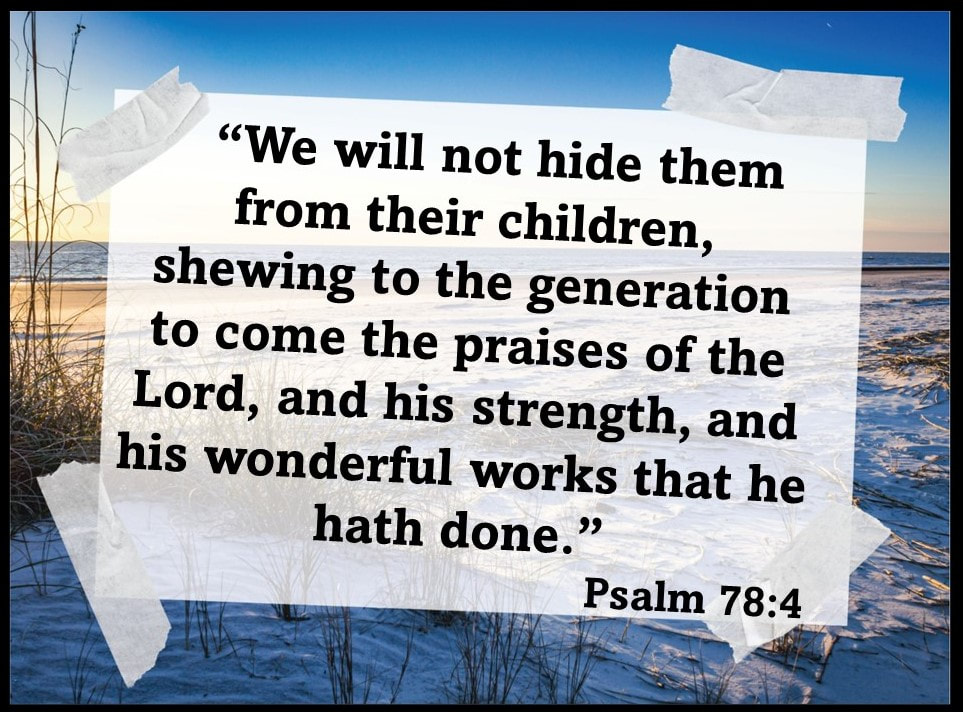
Parents stand between past generations and the generations to come. We have been entrusted with a godly legacy. What we have received, we must pass on. "We will not hide" what "our fathers have told us" (verse 3). We are to pass on (1) "the praises of the Lord," (2) God's "strength," and (3) "his wonderful works."

As a family, we are building a home and raising children to take the faith of God into the next generation. That is vitally important! If we fail, God's Word and ways can be lost—hidden from "the generation to come."

Psalm 78:4 tells how to preserve and pass on godly truths. Speak often of God's "wonderful works." Share answers to prayers. Tell others how you got saved or how you found the Church of God. What "wonderful works" could you share with someone today?
If the younger generation is well instructed, they will be more likely to avoid many of the errors of their fathers.

busy here and there

7/5/2023

 
Picture
God had given Israel a great victory! 127,000 Syrians died in one day. King Ben-Hadad brought his army to fight against Israel twice, and God gave Israel victory both times.

Yet, King Ahab made a peace treaty with King Ben-Hadad and let him go. He failed to accomplish the task God had given him, and soon the king of Syria would attack Israel again.

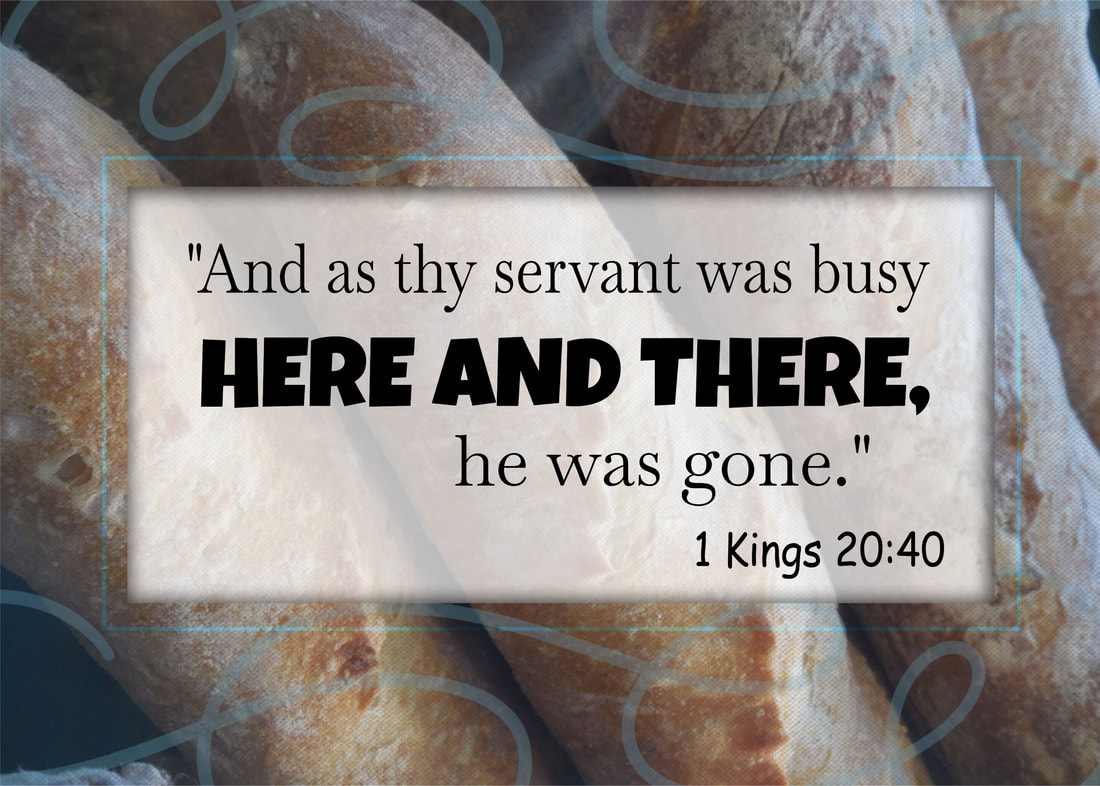
God sent a prophet to Ahab with a parable. The prophet said in the middle of a battle, he was told, "Guard this man," but while he was "busy here and there," the man got away.

The rebuke from God to Ahab is a sobering warning. We are entrusted to "guard" many things. God's Word tells us to keep (guard) our hearts (affections, desires), our tongues, God's commandments, and His ways. This requires attention and diligence in our prayer life, Bible reading, and church attendance. How easy it is to become "busy here and there" with the cares and pleasures of life and lose focus of what is most important. We are in a spiritual battle and must keep careful guard over our souls. Beware of the distraction of busyness.
No other activities will substitute in God's sight for our failure to do the work He has called us to do.

spiritual scarecrows

4/10/2023

 
Picture
During the Middle Ages, children were often given the responsibility of running through recently planted gardens while clapping pieces of wood together to scare away the birds. They were called "crow-scarers."

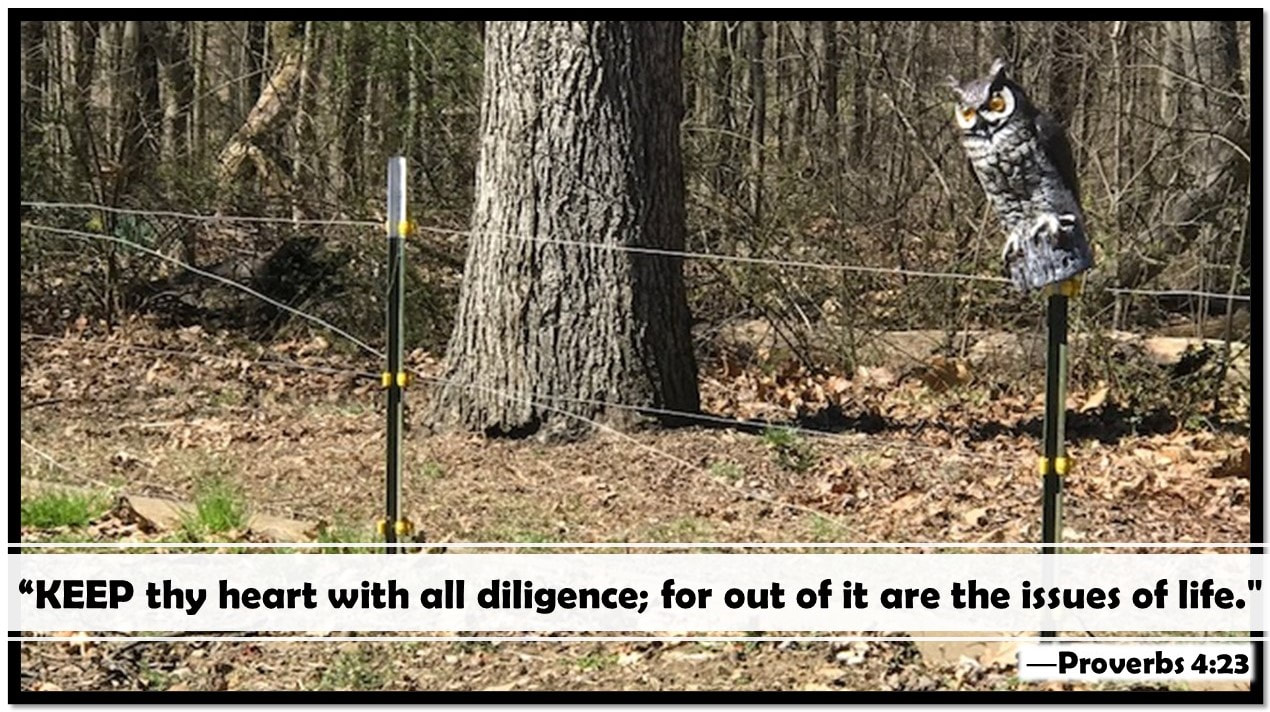
Each spring, after planting our garden, we put a scarecrow owl on a post to scare birds away and protect the seeds. We also place a black garden hose that looks like a big snake between the rows.

Jesus compared the Word of God to seeds being planted. He warned of "fowls of the air" which are looking to devour that seed. Just as literal scarecrows can help protect the seeds, perhaps placing some spiritual scarecrows in our "heart" garden would be good. We must "keep" (guard) our heart "with all diligence" to protect the valuable Word of God (our Bible reading).

A few spiritual scarecrows to consider:

• Review. We check our garden frequently and move the scarecrow owl around. Likewise, it might be helpful to read again and meditate on the Bible reading that has been recently planted in your heart.
• Prayer. We do not leave the seeds laying on top of the ground, but we cover them with a layer of dirt. Prayer after Bible reading can be like that—carefully preserving and protecting God's words.
• Praise. Like the children clapping pieces of wood together, praise and thanksgiving will chase away the "fowls" (thoughts of discouragement, unbelief, and depression).

​What spiritual scarecrows are you establishing in your heart garden today?
​A great place to find God is in a garden.
—Anonymous

fully rest in the lord

2/15/2023

 
Picture
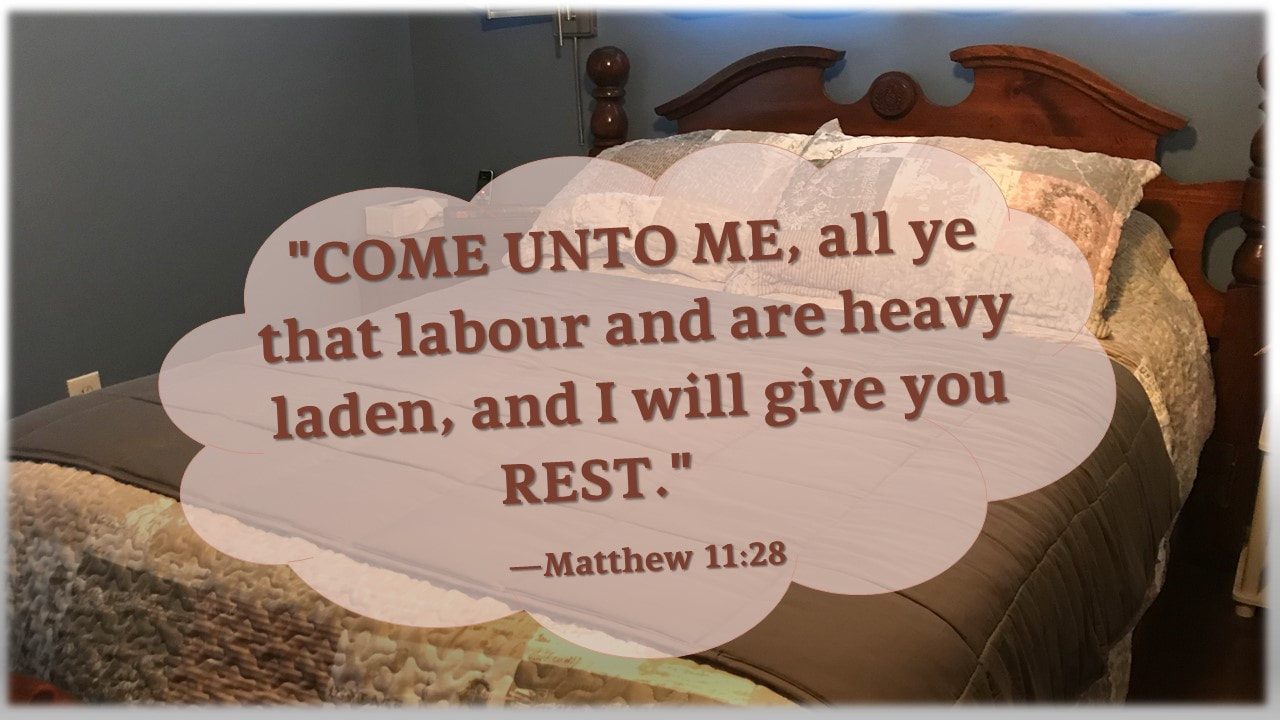
Bedtime with children can be challenging. They want the door open or the light on or a drink or another hug—anything to keep them awake. As exhausted parents, we look forward to everyone settling down so we can go to bed and REST. Yet, when we do finally lay down, we do not keep one foot on the floor, just in case the bed cannot hold us. We fully rest, trusting the bed and mattress will fully support us.

Today, we live a fast-paced life. Coffee and sugar keep us going. Busyness, stress, and a lack of sleep produce anxiety, forgetfulness, and irritability. We sing "I can trust Jesus," yet like Martha, we are anxious and troubled about many things (Luke 10:41). It is kind of like trying to sleep with one foot on the floor.

The word rest is translated as "to be at peace, to be still, to be calm or quiet." This restful, peaceful living is promised to us when we live in God's presence, submitting ourselves completely to His will.

The secret to tranquility is to "take my yoke upon you, and learn of me" (Matthew 11:29). To "learn of" Him brings understanding that no matter the problem, He is in full control; that He is working ALL things together for our good; that He will supply ALL our needs.
​
When we take God's yoke (allowing Him to be in full control—leading and guiding us), He will give us the soul rest so vitally needed! "A calm and peaceful heart is life and health to the body" (Proverbs 14:30 AMP). Instead of spending so much time being worried and fearful (with one foot on the floor), let us "REST in the Lord."
Fear arises when we imagine everything depends on us.
—Elisabeth Elliot

pebbles and diamonds

1/24/2023

 
Picture
​An old legend is told of a group of travelers who were preparing to retire for the night when they were visited by a celestial being. The travelers were told to gather as many pebbles as they could and put them into their saddlebags. "Travel a day's journey, and tomorrow night will find you GLAD, and it will find you SAD."

Although this simple task made little sense, the travelers picked up a few pebbles and put them in their bags. The next evening, they discovered every pebble had turned into a diamond. They were GLAD they had diamonds, but SAD they had picked up so few pebbles.

Every time we come to the house of worship, there is "much treasure." Yet, in the moment, it may only look like a "pebble"—small, insignificant, common, and worth little. Pebbles can be in the form of a song, message, testimony, or verse of Scripture. They are words of truth, advice, direction, and encouragement that might seem unimportant at the time. Like the pebbles in the story, effort must be put forth to pick up these truths and store them in our hearts and minds.
​
There will be days when trials and temptations come our way. Depression tries to work, or doubts plague our minds. That is when God brings to our remembrance a testimony, song, message, or godly counsel (a "pebble") from a recent worship service to encourage and strengthen us. It is then, we realize our "pebble" has turned into a "diamond!"
You can be SAD because you failed to gather the "pebbles" when they were available. Or you can be GLAD because you gathered many "pebbles," and now you have "much treasure."

Leaving Lodebar

1/2/2023

 
Picture
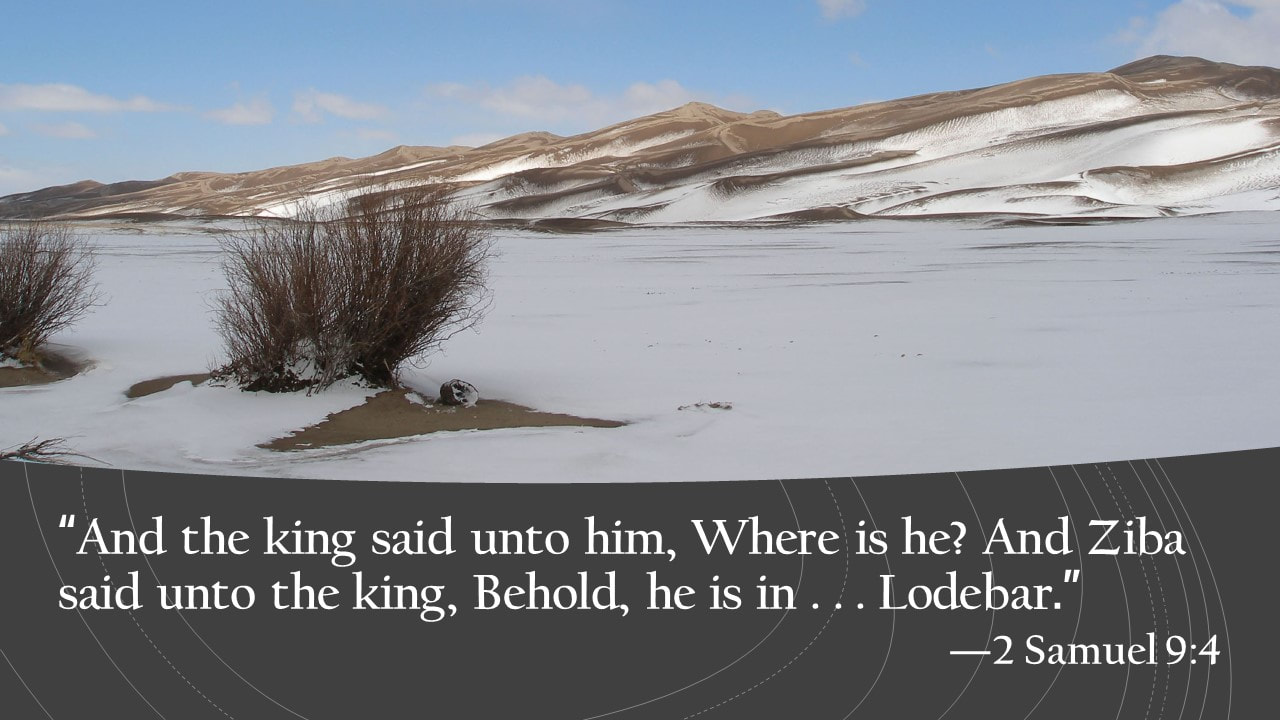
Mephibosheth was only five years old when word came that his father (Jonathan) and grandfather (King Saul) had died in battle. As Mephibosheth's nurse fled with him, "he fell, and became lame."
​
After David became king of Israel, he asked if there were any "left of the house of Saul." David and Jonathan had been close friends, and David promised to show kindness to Jonathan and his family (1 Samuel 20:15). King David was told of Mephibosheth, who lived in Lodebar.

The word Lodebar means "no word or thing, no pasture, no communication, a parched dry place, no shepherd." This was where Mephibosheth was living. King David sent for him, brought him to the king's palace, set him at the king's table, and restored the family lands to him.

Isaiah 53:6 says, "All we like sheep have gone astray." For one reason or another, we all left the King's house and ended up in a spiritual Lodebar—a place of no Word and no Shepherd. Like King David, God is seeking for ones to show kindness to. He is sending His servants to the dry, parched places, the places where there is no Word of God and no Shepherd (Jesus), so they can bring people back to Father's house.

When we arrive at Father's house, we find He restores that which was lost and gives us a place at His table where we can "eat bread alway." What a beautiful picture of God's love reaching to the farthest, most desolate places, desiring to bring the lost home to a good place where they are well-fed and have a good Shepherd!
"He brought me forth also into a large place; he delivered me, because he delighted in me."
—Psalm 18:19

Keep trying - keep encouraging!

10/12/2022

 
Picture
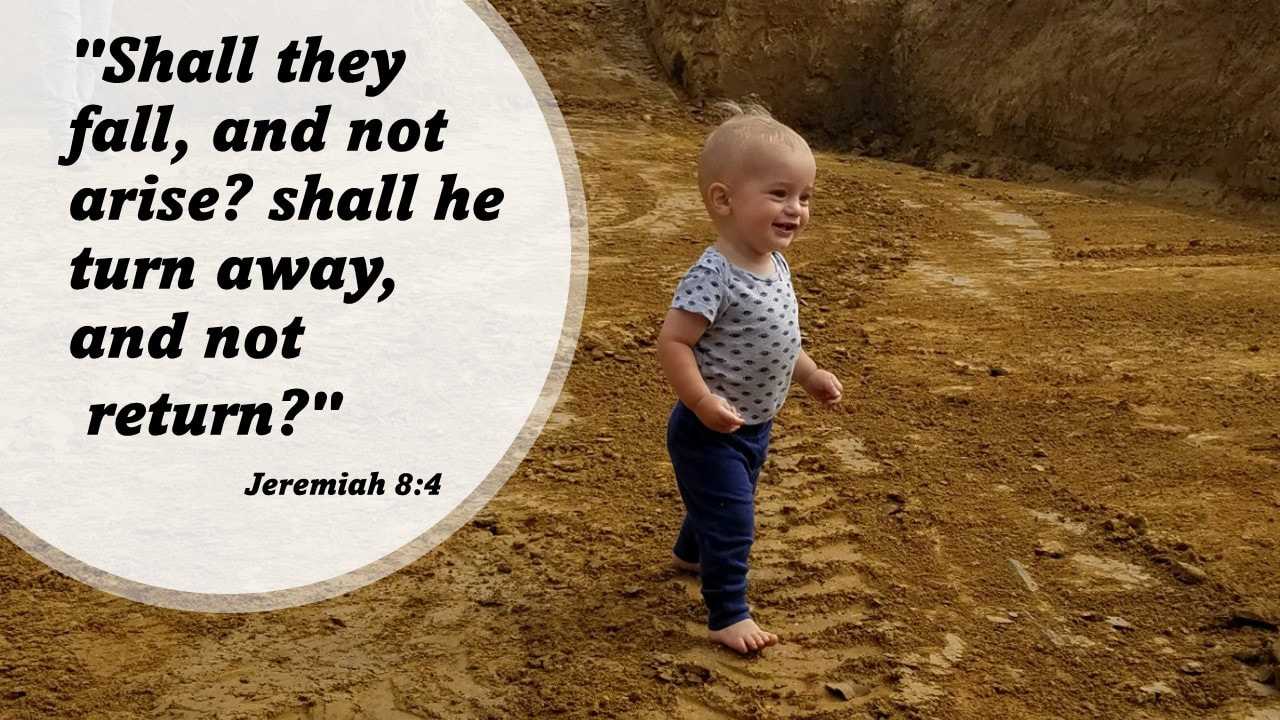
​The determination of a baby learning how to walk is inspiring. No matter how many times he falls, he gets back up and tries again. There are usually cries, tears, bumps, and bruises, but something within drives him to get back up and take another step. Much praise and encouragement often accompany this important milestone: "Good job! You can do it!" Hand clapping and smiles let the baby know how proud everyone is of him. The more he walks, the fewer the falls. Yet, every time he falls, he gets back up.

Jeremiah wrote of a people who had fallen spiritually. Israel had backslidden and refused to "arise" and "return" to God. Many Christians (especially early in their walk with God) find habits and old sinful ways hard to let go. But like the baby's loving parents and friends, our Heavenly Father and the Church of God are sending words of encouragement to the one who is struggling to walk: "With God's help, you can do it! We love you! We are praying!"

Imagine when a baby is learning to walk, someone who is very negative saying: "You fell again. You're worthless! You'll never learn to walk!" How discouraging. We have an enemy of our souls who is doing his best to make us "fall, and not arise." He does not want to see anyone successfully walking with Christ.
​
If you are struggling in your walk, like the determined toddler, keep trying. If you are a seasoned saint of God, like the proud parents, keep encouraging. Both of these, combined with fervent prayer, will bring about people who are determined to walk with the Lord.
Our greatest weakness lies in giving up. The most certain way to succeed is always to try just one more time.
—Thomas Edison

harvest workers

10/6/2022

 
Picture
In Old Testament Israel, a year when the grain harvest failed and the summer crop (grapes, figs, olives) was unproductive meant a dark winter of famine was coming. A proverb says, "One season of hope after another has passed, but the looked-for deliverance never came, and now all hope is gone."

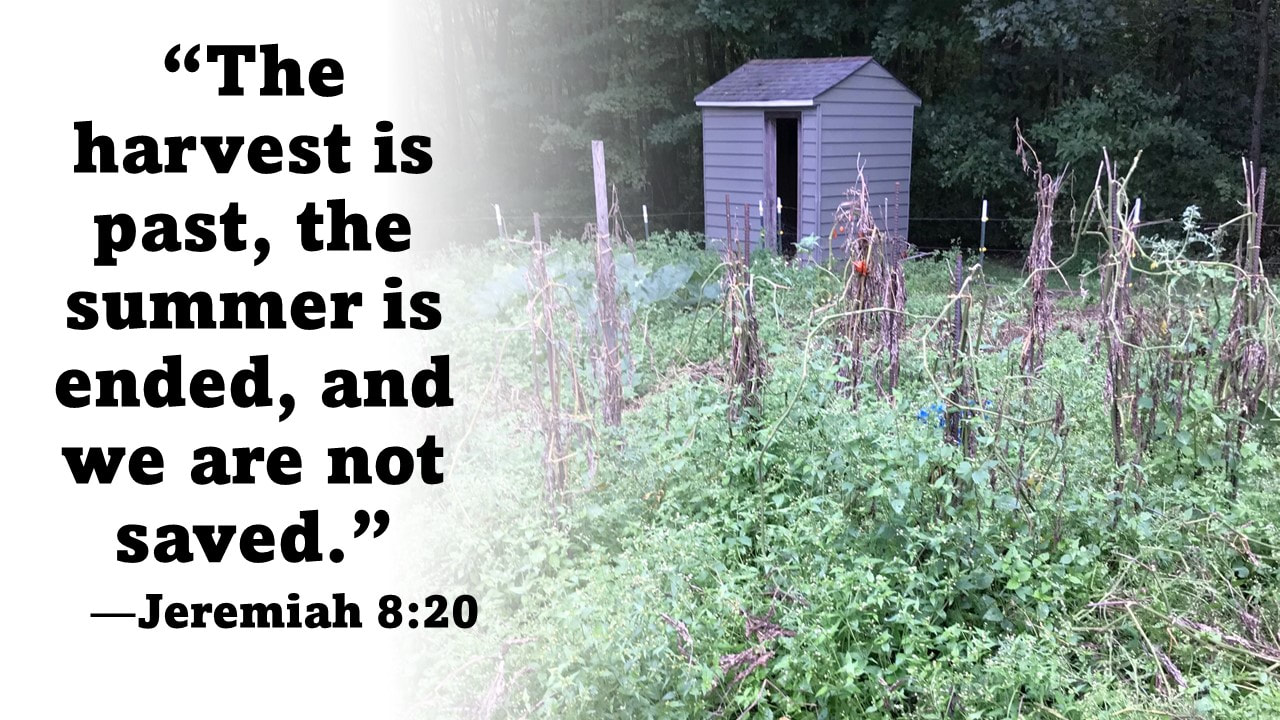
Thankfully, this was a good year for my garden, but as I began cleaning up the dead plants at the end of the summer, I found several tomatoes that had ripened and then fell to the ground. I had been too tired and too busy to harvest them when they were ready. 

While working in the garden, this verse came to my mind. Often, we think of it as referring to a sinner missing his opportunity to be saved. However, God's people are needed to work the harvest. Luke 10:2 says, "The harvest truly is great, but the labourers are few." Could it be that like those ripe tomatoes, some souls were ready for the harvest and only needed a "labourer" to show them the way of salvation? Could it be that busyness, weariness, and the cares of life kept us from working in the "garden," and now "the harvest [opportunity] is past"?

It is easy to think of all the tomatoes that were harvested and count the loss of a few missed tomatoes as no big deal. While that might be true of a literal harvest, God's "labourers" consider every soul to be of great value! "Let us not be weary in well doing: for in due season we shall reap, if we faint not" (Galatians 6:9).
When we become too consumed with the cares of this life, it is easy to forget we are harvest workers for the Lord.

are you "out of order"?

9/16/2022

 
Picture
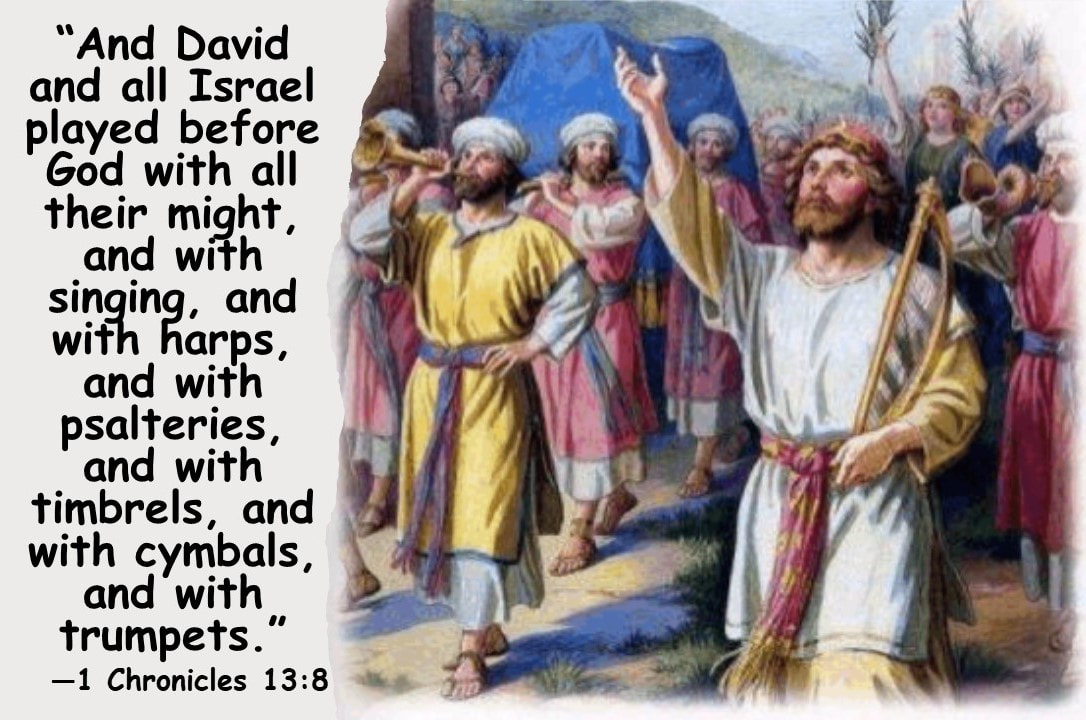
After the Ark of the Covenant was taken by the Philistines and then returned to Israel, it remained in the house of Abinadab for many years. When David became king of Israel, he desired to "bring again the ark of God" to Jerusalem. The Ark had been neglected "in the days of [King] Saul." With great rejoicing and singing, David and 30,000 "chosen men of Israel" (2 Samuel 6:1) accompanied the Ark as it traveled. Our text says they "played before God with all their might!"

Yet, in the next two verses, we read that "the oxen stumbled," Uzzah put out his hand to steady the Ark, God became angry, and Uzzah died. No doubt, the rejoicing and singing immediately stopped. Something was out of order! God is a god of order, and the Ark was where His presence dwelled. It was not to be treated lightly or as something common.

In Numbers 4:14-15 God made it clear the Ark was to be carried on poles on the shoulders of the priests (not in a cart). Not only was God's law disobeyed, but a lack of reverence was shown when (though well-intentioned) Uzzah touched that which was holy (the Ark). Later, David said, "We sought [God] not after the due [proper] order" (1 Chronicles 15:13).

This sobering account serves as a warning to us today. We might come into worship service and sing, play an instrument, and rejoice with "all our might," but if something is out of divine order somewhere in our lives, God will not be pleased. It would be wise to ask God to search us: "Is there anything out of order in my life?" Good intentions are not a substitute for obedience to God's commandments. 
Let the sin of Uzzah warn all to take heed of irreverence ​in dealing with holy things. Let none think a good design will justify a bad action.
—Matthew Henry

weed removal

8/25/2022

 
Picture
​How quickly weeds grow! Recently, while working in a flower bed, I noticed that weeding in areas where there were no plants or flowers was not nearly as difficult as working under and around the plants. When weeding a creeping phlox, I had to lift the plant to get to the roots of the weeds. Some of the more firmly entrenched weeds required a tool to remove them.

As I worked, I thought about how ministers, evangelists, and teachers work hard to remove the spiritual weeds in our lives. It often takes a skilled, loving pastor who knows his people to remove the weeds under and close to the plants. Just as weeding might require moving the plants around and loosening the soil for the coming rain, often preaching can make people feel uncomfortable. Are there times when pastors make decisions or preach something that we do not like? Some have said, "He's getting in my sandbox." Or perhaps we could say, "He's working in my flowerbeds."

There might some firmly entrenched weeds that need a removal tool. The pastor might feel impressed to call for a revival. The "plants" (the congregation) find that their schedules have to be rearranged. This can be inconvenient. However, a week or two of continual preaching pokes, prods, and begins to remove some of those stubborn weeds. While the "plant" (our flesh) does not enjoy the weeding process, God knows that it is vital!
​
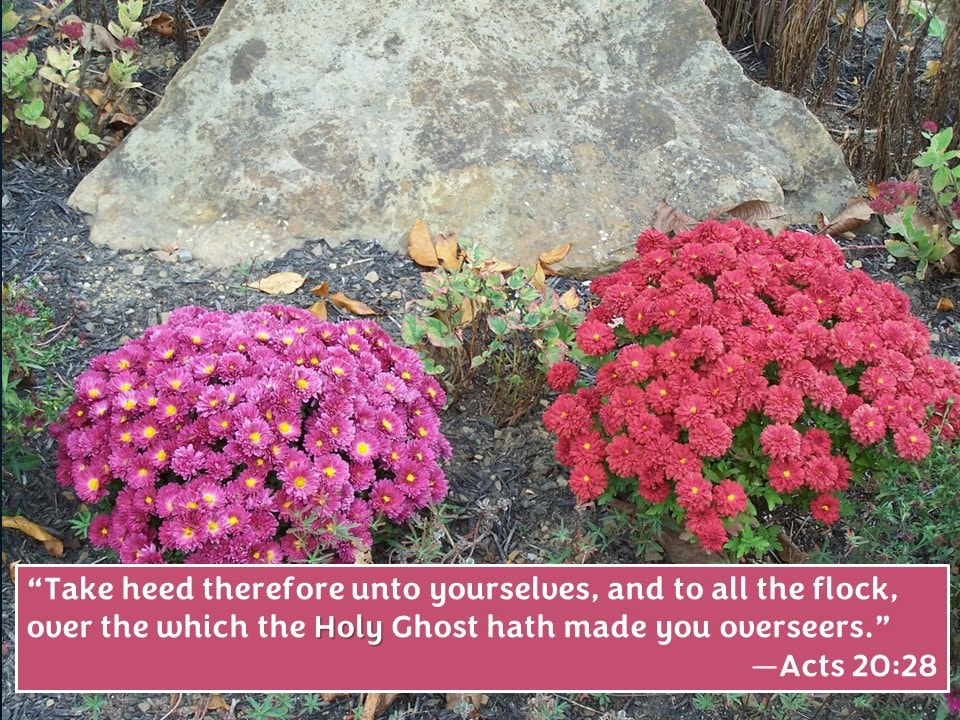
God promised to give us "pastors according to mine heart, which shall feed you with knowledge and understanding" (Jeremiah 3:15). Today's verse admonishes pastors to "take heed ... to the flock." Just as skilled shepherds care for their sheep and seasoned gardeners care for the plants in their garden, God's pastors are ever watching and weeding out the things that (if allowed to grow) will choke out the lives of the people. What a blessing to have a God-called pastor!
Let the elders that rule well be counted worthy of double honour, especially they who labour in the word and doctrine.
—1 Timothy 5:17

STABILITY OF THY TIMES

8/22/2022

 
Picture
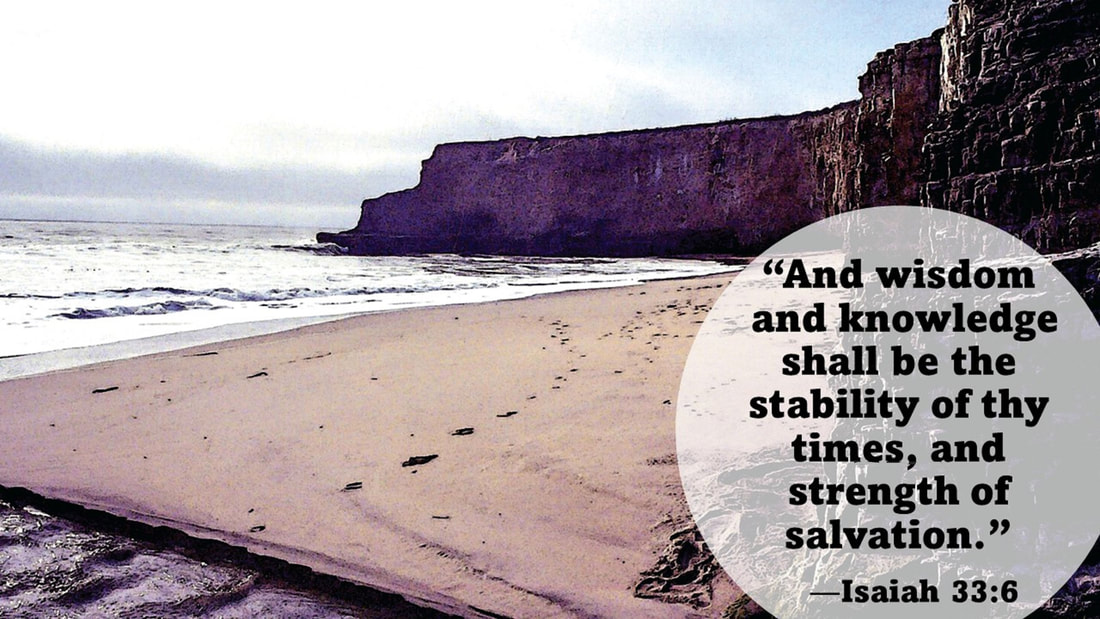
In June 2022, the Utah Bureau of Land Management issued a warning to hikers of an area of quicksand. The warning said, "Mud cracks around the edges of the pond give the illusion of stability, but it is unstable." While firm, stable ground is important, how much more needful is "stability of thy times!" When Isaiah wrote these words, Israel was facing an invasion by the cruel Assyrians. During such a time of great fear and stress, "stability" was much needed.

What about our "times" today? Is there instability and uncertainty in our world? Often, we hear people talk about "my truth" or "your truth" instead of "the truth." Like quicksand, "my truth" is not a trustworthy foundation. "My truth" usually consists of my opinions, my beliefs, and my understanding. There is much room for human error.

While the world has much "knowledge," this has often proved to be areas of quicksand. "Follow the science" is a popular slogan. Yet, in years gone by, science has told us the sun revolves around the earth, that handwashing is not very important, and that metal can be turned into gold. If we cannot fully trust "my truth" or the "world's truth," what can we trust? Where is "the stability" of our "times"?
​
Jesus said, "I am the way, THE TRUTH, and the life" (John 14:6). "All the treasures of wisdom and knowledge" (Colossians 2:3) are found in Jesus. "Stability" of our "times" will not come from following "our truth" or the "world's truth." When we earnestly seek God for "wisdom and knowledge," Proverbs 2:5 promises, "Then shalt thou . . . find the knowledge of God."
If God leaves us to ourselves any morning, we are undone.
—Matthew Henry

there is none like that!

6/10/2022

 
Picture
King Saul was determined to kill David. Envy and jealousy had filled his heart, and he continually sent men to find and slay David. David fled for his life. He said, "There is but a step between me and death" (1 Samuel 20:3).

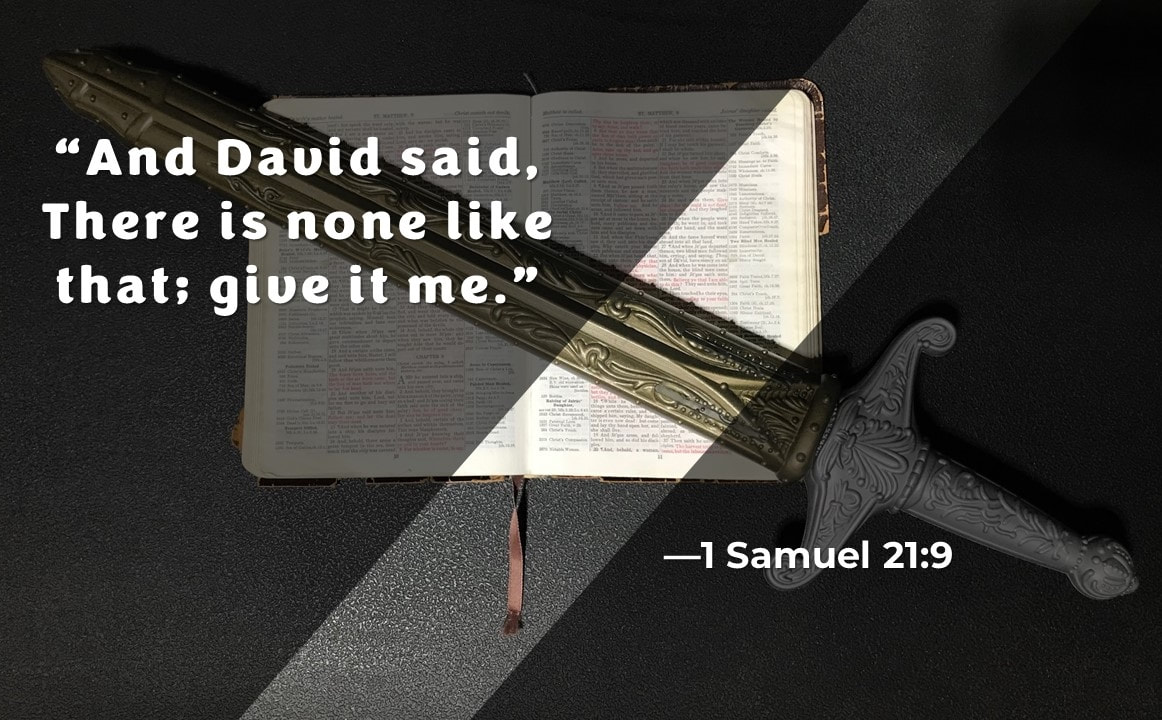
After counseling with God's prophet Samuel, David traveled to Nob (a city of priests) where he hoped to receive comfort, counsel, and supplies. When David asked Ahimelech the priest for a spear or a sword, Ahimelech told him he had "the sword of Goliath . . . if thou wilt take that, take it."

What encouragement the sight of that sword must have brought! It was a reminder of the victory God had given David in spite of the incredible odds that were against him. Not only that, but this sword had been tested and proved. Goliath would not have had an inferior weapon.

How many times are we in severe trials, and we wonder if we are going to make it? We have an enemy who is trying to kill us spiritually. Like King Saul, he is relentless! This account of David tells us how we can have victory:

(1) Counsel with spiritual leaders
(2) Make worship services a priority
(3) Take the tested and proven Word (the Sword of the Spirit)

​It is easy to lose sight of the power there is in God's Word! It must be our DAILY bread. We have an enemy who is ever working to destroy us. It would be good to start every day with the Bible. Let us say, like David, "There is none like that; give it [to] me!"
Within the covers of the Bible are the answers
​for all the problems men face.
—Ronald Reagan

feeling safe

5/24/2022

 
Picture
Years ago, there was a shooting close to my local Walmart. For a few hours, it was thought that there was an "active shooter" in the area. As I was paying for my groceries, the cashier said to me, "Be SAFE out there!" I certainly did not FEEL safe walking out to my car.

How often do we make decisions based on feeling safe or feeling unsafe? Consider what makes you FEEL SAFE. Having enough money makes me feel safe. Many years ago, we went through a financially difficult time, and we did not have enough money for all our needs. That created stress and anxiety. Being in control also makes me feel safe. When our children were learning how to drive, they were in control of the car (not me), and at times I did not feel safe.
​
Have you ever considered that keeping the Gospel to ourselves makes us FEEL SAFE? Sharing our faith with others often requires stepping out of our comfort zone (a place of safety). After Jesus' death, the Christians stayed together in Jerusalem. No doubt, there was a feeling of safety in numbers, but the Great Commission was "Go!"

Consider men and women who stepped out of their comfort zones. Abraham left his country, not knowing where God would lead him. Moses led over a million Israelite slaves out of Egypt. Noah built an enormous ark. Esther went to see the king without being summoned. They risked much but saved many.

For many, Christianity consists of reading the Bible, praying, and attending worship services. There seems to be little risk or courage required. However, God needs people who will step out of their comfort zones and share the Gospel. "If we expect great things from God, we must attempt great things for God" (William Carey).

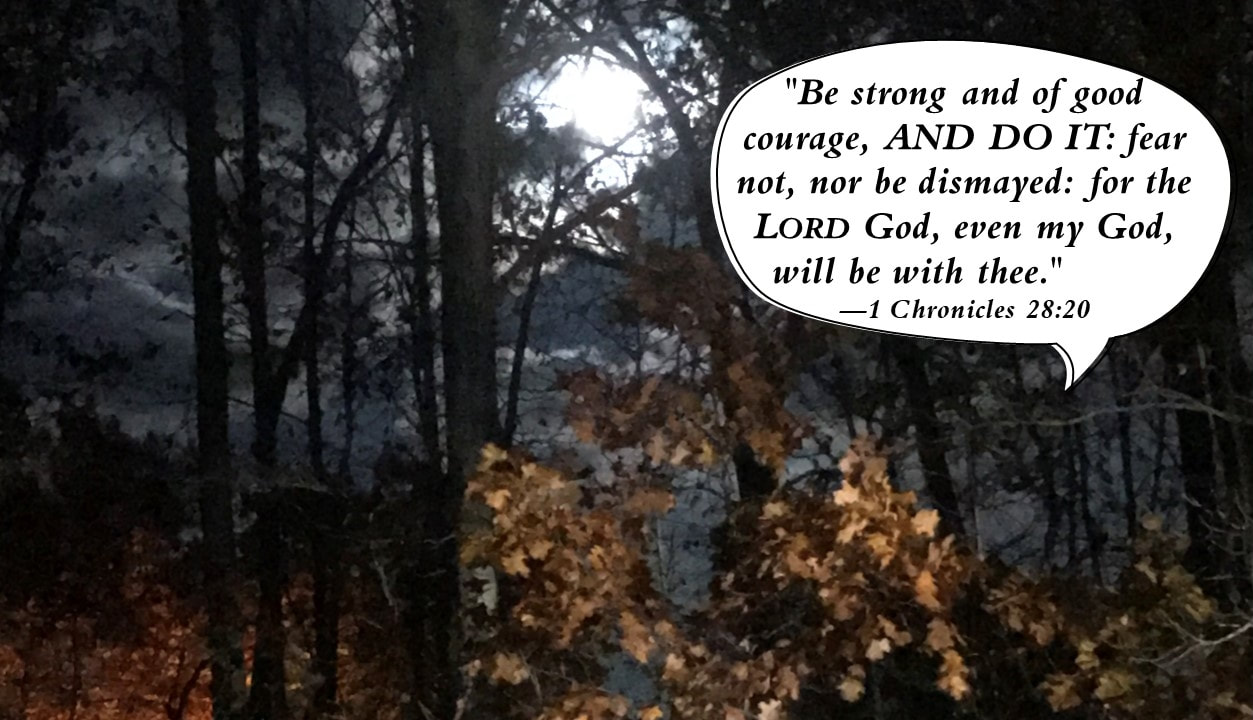
​With God's help, we can "be strong and of good courage, and DO IT!"
Great things never come from comfort zones.
— Unknown

"Things above"

5/9/2022

 
Picture
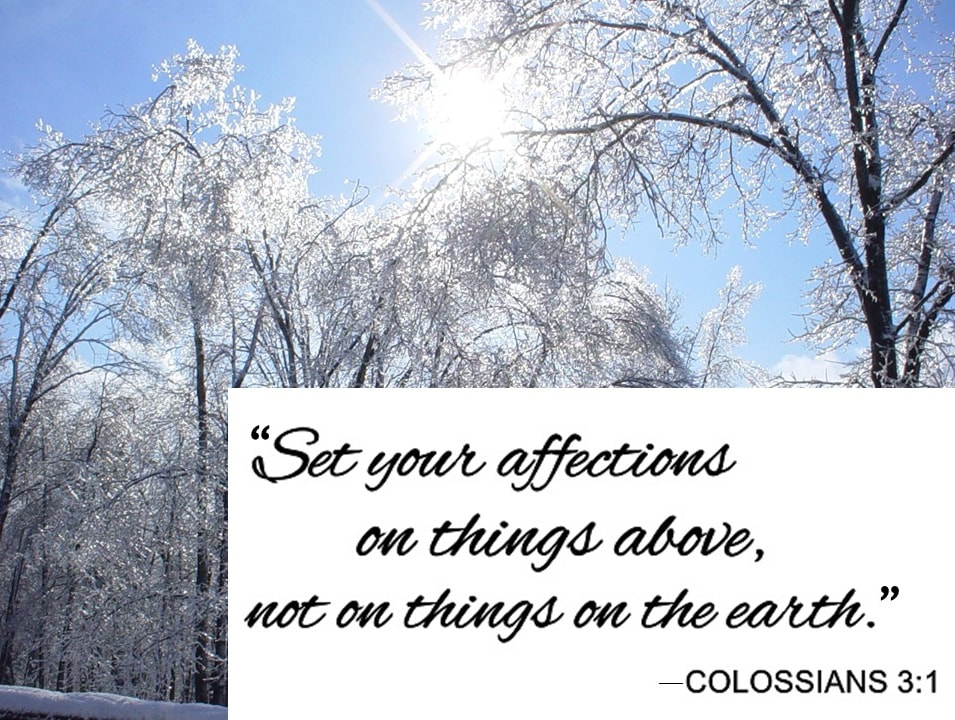
​When reading the story of Corrie ten Boom, who hid Jews from the Nazis, I find myself thinking: "If only she hadn't opened the door to the man who betrayed her, she would not have been arrested. She could have stayed in her home, safe with her family." Perhaps I have been looking at this story with earthly eyes. What if Corrie's arrest and imprisonment were God's plan all along? God needed missionaries to go to the Ravensbrück  concentration camp and share the Gospel with the many women who were facing certain death.

Although the cost was high (Corrie's father, sister, brother, and nephew died), Corrie's prayer was: "Lord Jesus, I offer myself for Your people. In any way. Any place. Any time." She had "set" her "affection on things above."

When suffering, trials, afflictions, and persecution come our way, James 1:2 tells us to "Count it all joy." This is difficult when we have an earthly mindset, but when our eyes are "set . . . on things above," we learn that trials and joy are not incompatible. Third John 1:4 tells us the greatest joy is "to hear that my children walk in truth." While we do not enjoy the suffering, we can find great joy when God uses it for His glory!

The danger is in becoming too attached to the "things on the earth." "When we focus on earthly things, our eyes slip from the 'things above'" (L. Hoover). When that happens, we need to refocus and "set" (an action word) our mind on "things above." This will require laying down things, plans, ideas, and opinions that are not part of God's plan and submit to His plans and ideas. When we do this, the songwriter tells us that "the things of earth will grow strangely dim."
Every possible trial to the child of God is a masterpiece of strategy of the Captain of His salvation for His good.

—Jamieson-Fausset-Brown 

boldness from "bonds"

4/25/2022

 
Picture
Over 130 years ago, a young man in West Africa escaped captivity from a neighboring tribe and ran through the jungle until he reached the city of Monrovia. There, he met a missionary who told him of Jesus, and this young man gave his heart to God. His name was Samuel Morris.
​
Samuel had a strong desire to go to America and learn more about the Holy Spirit so he could return and tell his people about God. Though penniless, God provided a way to America, and soon Samuel was enrolled at Taylor University in Indiana. Morris' strong faith in God seemed to touch all who knew him. Often, he could be heard in his dorm room "talking to my Father."

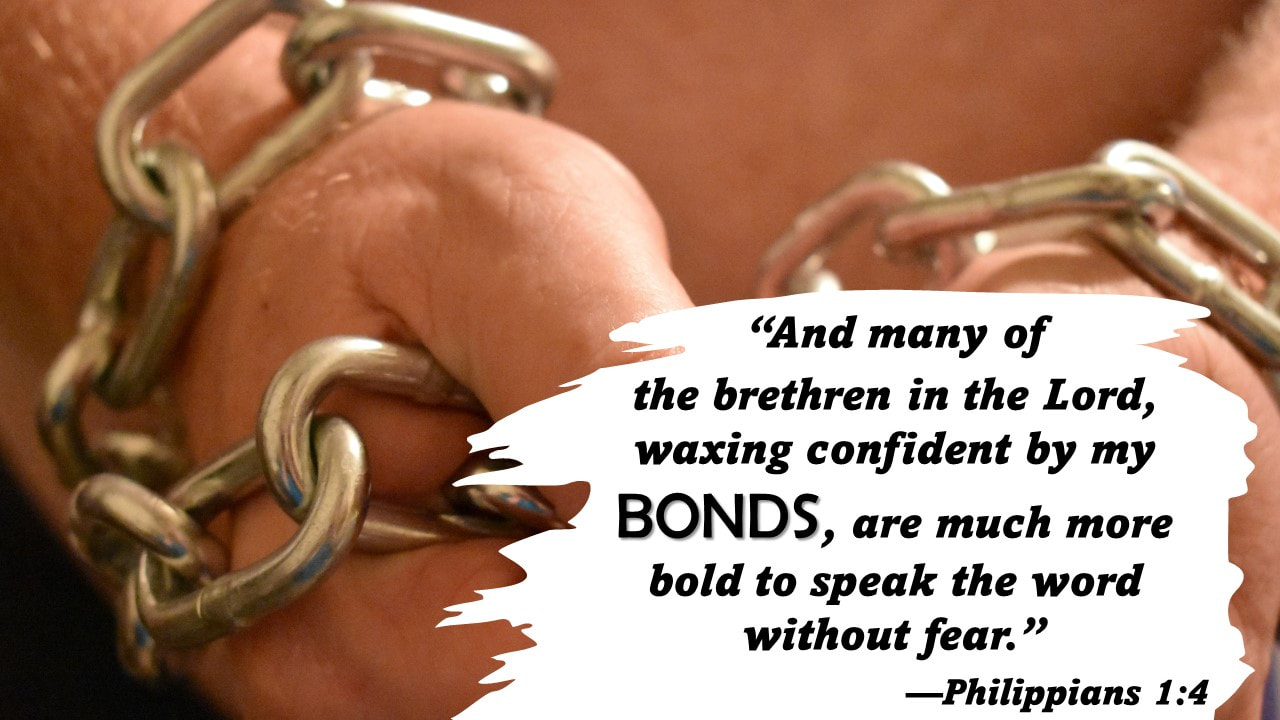
After coming down with a severe cold, Samuel died. His desire to take the Gospel back to Africa was fulfilled, but not in the way he had planned. Many young people were so inspired by Samuel's faith that soon after his death, they felt the call to be missionaries in Africa. Through Samuel's "bonds" (illness and death), many were "much more bold to speak the word without fear."

The Apostle Paul was in prison when he wrote at least four of the Epistles. It might have seemed that his "bonds" (persecution and imprisonment) were hindering him from doing God's work. Yet, Paul understood God had something far greater in mind. Through Paul's "bonds," many Christians were strengthened ("waxing confident").

What "bonds" might you be dealing with today? Persecution, afflictions, trials, or the loss of a loved one can be devastating! You might think: "Why would God let these things happen to me? Doesn't He know how much they are hindering me?" The lives of the Apostle Paul and Samuel Morris remind us God sees the WHOLE picture. He knows that MANY can be encouraged and become bolder for Him by your "bonds." We must let God do His perfect work.
In God's economy, nothing is wasted!
​Not our time, not our sacrifice, not our life.
—Unknown

Distractions

4/8/2022

 
Picture
Texting while driving has proven to be dangerous. Because it is so distracting, it has been banned in almost every state. Every time our phone rings, pings, vibrates, or receives a notification and we pick it up, we are being conditioned to respond to distractions. The art of being quiet and still is being lost. (Some call it "boredom.")
​
When Jesus visited the home of Lazarus, Martha was greatly distracted by "much serving," but her sister Mary "sat at Jesus' feet and heard his word" (Luke 10:39-40). Mary was quiet and still while Martha was "cumbered about" (being dragged in different directions).

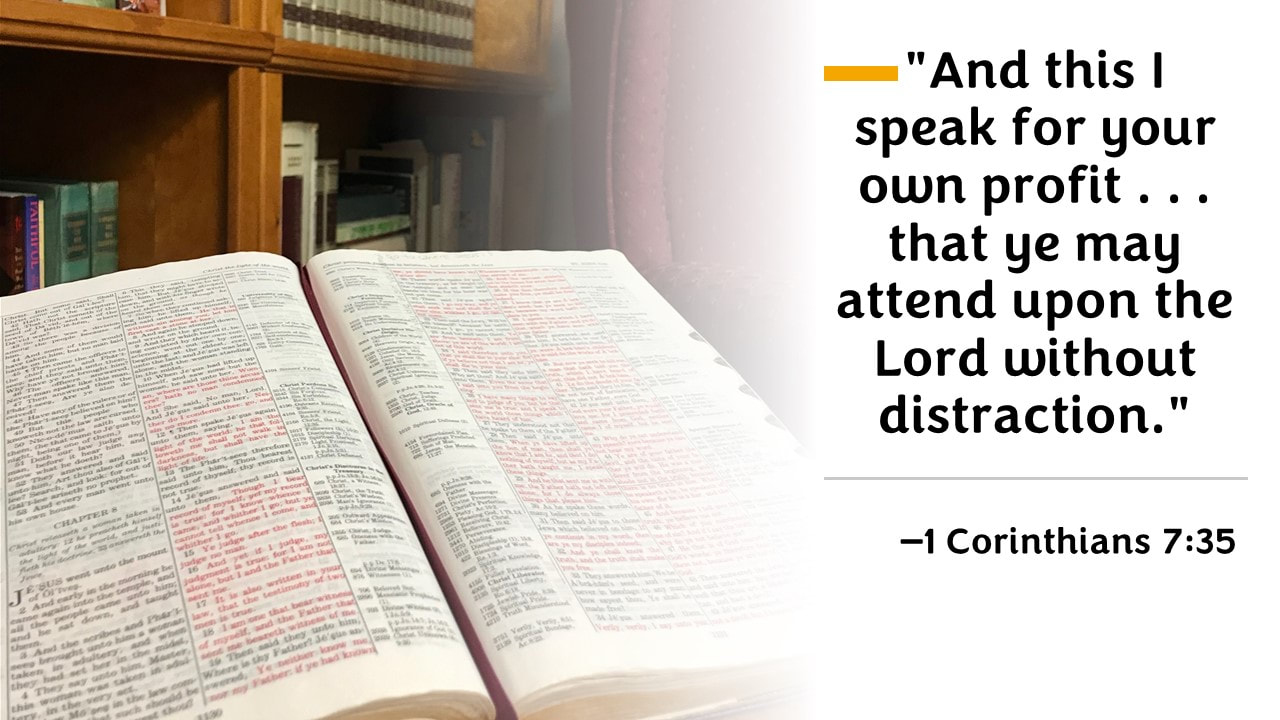
Paul wrote of the importance of not allowing things in this life to distract from serving the Lord. It has been said, "If the enemy cannot destroy you, he will distract you." Consider: what do you find distracting during your time of personal devotions? Do you find yourself continually checking your phone for a text or to see if you have a notification?

What distracts you during the worship service? Are you prevented from sitting at the feet of Jesus and hearing His words by your phone or by thoughts of "much serving" (what needs to be taken care of after the service)? Martha tried to distract her sister from hearing the words of Jesus. Do you allow people to prevent you from hearing God's words? Is texting or talking during the worship service a distraction?

Our ATTENTION is a valuable resource! The enemy will use whatever he can (phones, worldly cares, people) to distract our attention from what is most important. Hebrews 12:2 in the Amplified Bible gives this good advice: "Looking away [from all that will distract] to Jesus." By ignoring all that tries to distract, we are choosing the "one thing [that] is needful," that which Jesus promised "shall not be taken away" (Luke 10:42).
-Sister Sheri Strelecky
When the enemy sends distractions, they never look like distractions until they are finished distracting you.
—Unknown

the cleft of the rock

3/10/2022

 
Picture
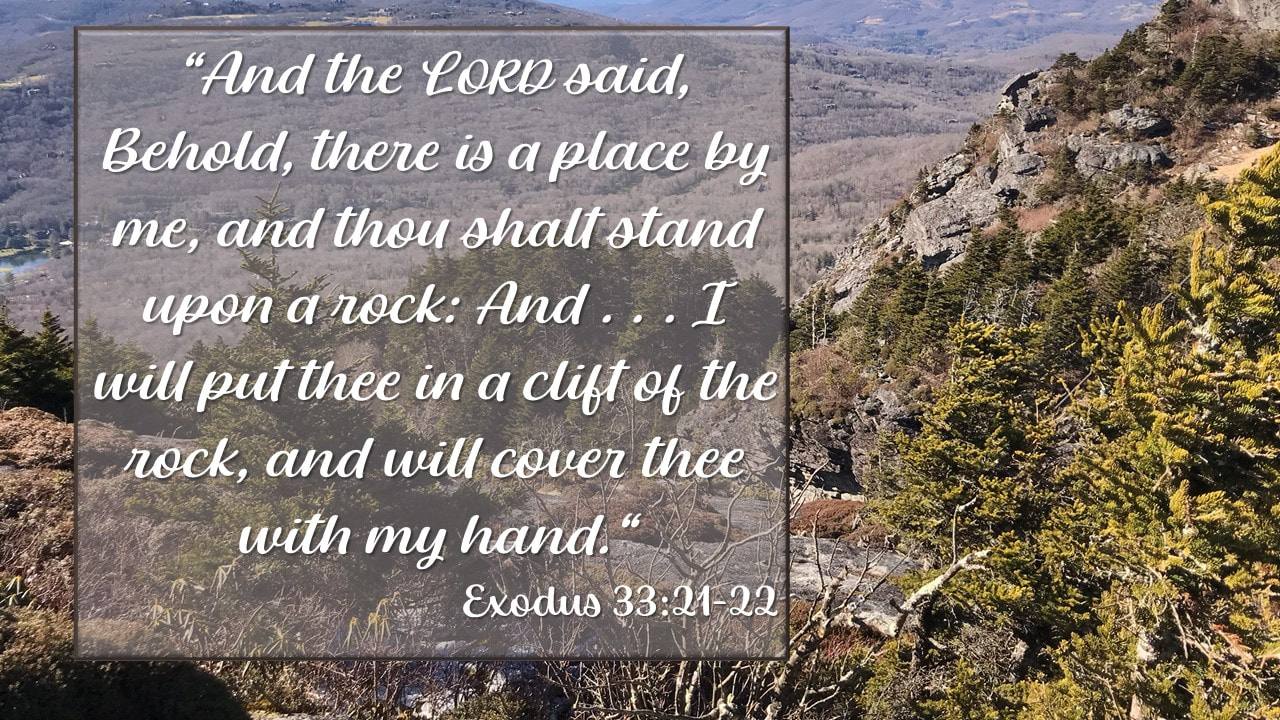
​Near the Valley of Salt, in a deep valley surrounded by high mountains, is the city of Petra. In Bible times, it is believed that the only way into this city and valley was through a long, narrow cleft in rocks that were as high as 250 feet. This natural defense was where the nation of Edom lived and successfully defended themselves. Obadiah 1:3 describes them as those who "dwellest in the clefts of the rock" (places of safety).

It was a time of repentance for Israel. God was angry because of the calf they had made and worshiped. Moses was interceding with God on Israel's behalf, and he asked God, "Shew me now thy way, that I may know thee [understand God's nature and character] . . . Shew me thy glory." Moses greatly desired a closer relationship with God. God told Moses, "There is a place ['a clift'] by me" where Moses could see the goodness and glory of God. This "clift" was where Moses' request (to know God in a greater way) was answered.

Many Scriptures describe God as "the Rock." First Samuel 2:2 says, "Neither is there any rock like our God." However, we cannot have a close relationship with God for our "sins have hid his face from" us (Isaiah 59:2). When we come to God, repenting of our sins, God places us in a "clift of the rock." Jesus provided this "clift" when He was beaten, wounded, and crucified. Just as God covered Moses with His hand (verse 22), the blood of Jesus covers all our sins. It is in this "clift" that we find safety, salvation, and refuge. It is where our "life is hid with Christ in God" (Colossians 3:3). Thank God for the "place by me," the "clift of the rock" (Jesus), that has made a way for us to be saved and have a close relationship with God!
Rock of Ages, cleft for me,
Let me hide myself in Thee.
—Augustus M. Toplady
<<Previous

    Author

    Write something about yourself. No need to be fancy, just an overview.

    Archives

    November 2025
    October 2025
    April 2025
    January 2025
    November 2024
    May 2024
    July 2023
    April 2023
    February 2023
    January 2023
    October 2022
    September 2022
    August 2022
    June 2022
    May 2022
    April 2022
    March 2022
    February 2022
    January 2022
    December 2021
    November 2021
    October 2021
    September 2021
    August 2021
    July 2021

    Categories

    All

    RSS Feed

Copyright ©   Church of God, Inc.   All Rights Reserved. 675 North Cedar Street, Newark, OH 43055
Photo from vastateparksstaff